
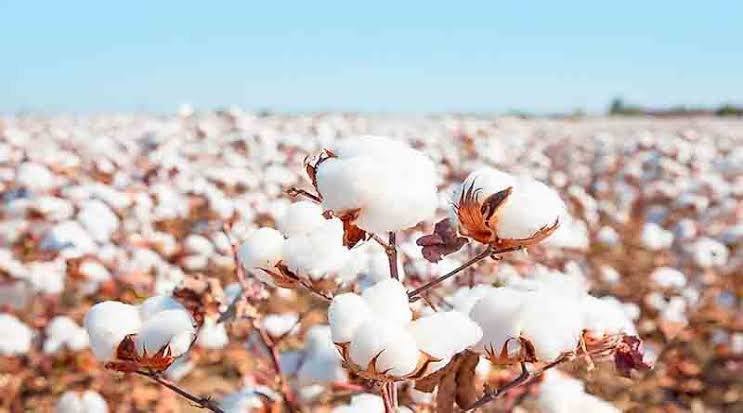
Pakistan’s cotton arrivals at ginning factories showed only a slight increase during the ongoing 2025–26 season, highlighting continued challenges in national cotton production.
As of January 15, 2026, total cotton arrivals reached 5.497 million bales, reflecting a marginal rise of just 0.13% compared to 5.490 million bales recorded during the same period last season.
Provincial data reveals a clear difference in productivity between Punjab and Sindh. Punjab cultivated cotton over a much larger area of 1.266 million hectares but produced 2.586 million bales.
In contrast, Sindh, with a smaller sown area of 0.562 million hectares, achieved a higher output of 2.911 million bales. This highlights a significant yield gap between the two provinces.
Based on official figures, Punjab’s average cotton yield stands at around 2.04 bales per hectare, while Sindh’s yield is approximately 5.18 bales per hectare.
Historical data further shows a worrying decline in Punjab’s productivity. Average yield in the province dropped from 1,722 kilograms per hectare in the 2023–24 season to 1,413 kilograms per hectare in 2024–25, a decline of nearly 18%.
Market trends also challenge claims that Punjab’s cotton is being transported to Sindh for ginning.
During the 2025–26 season, seed cotton prices in key Punjab districts such as Rahim Yar Khan and Bahawalpur remained higher than prices in Sindh districts like Sanghar and Mirpur Khas. This price difference suggests that large-scale movement of cotton between provinces is unlikely.
Late-season cotton arrivals received some support from favorable weather. Brighter days and milder temperatures since early December helped speed up boll maturity, adding around 75,000 bales in recent weeks.
Despite this improvement, overall national cotton output remains largely unchanged, raising concerns for the textile sector.