
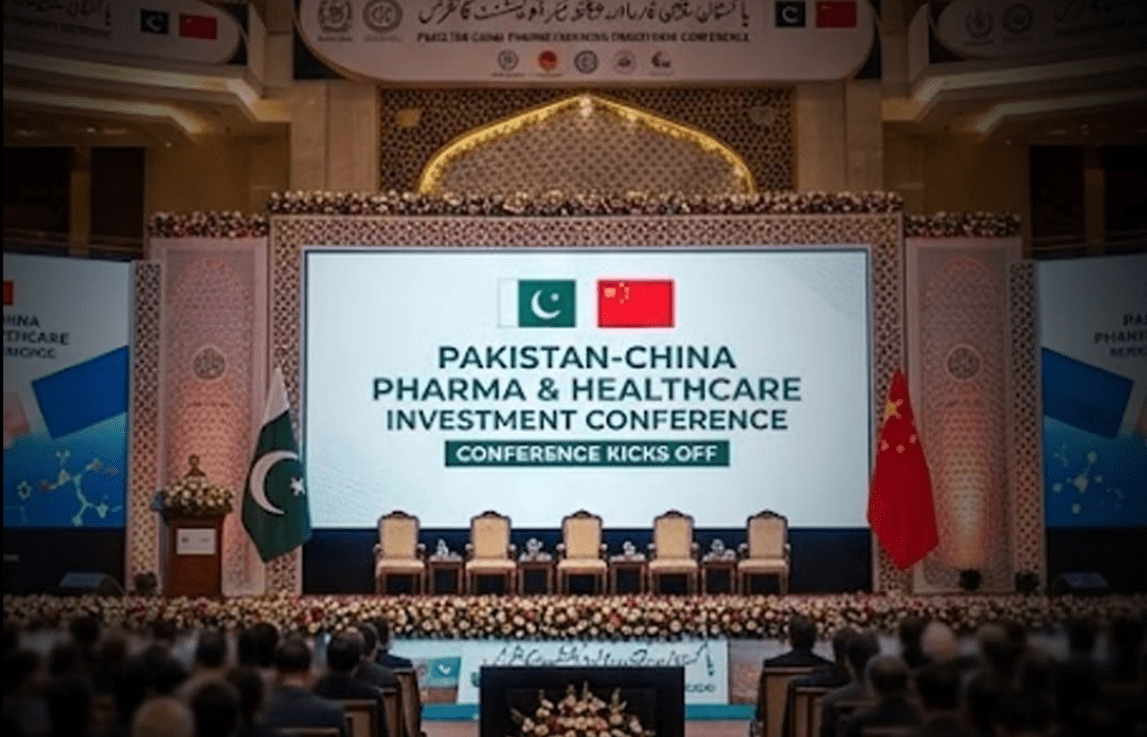
Pakistan and China have signed major pharmaceutical agreements worth $850 million. Federal Health Minister Mustafa Kamal announced this during the Pakistan-China B2B Pharmaceutical Investment Conference. The deals include $600 million in firm agreements and $250 million in memorandums of understanding (MoUs). Both sides also agreed on 18 herbal medicine projects.
The conference resulted in 16 agreements and 80 MoUs. These cover local vaccine production, medical device manufacturing, clinical trials, and vocational training. Pakistan currently imports 13 types of vaccines, with the import bill possibly reaching $1.2 billion by 2030. To solve this, the government approved the country’s first National Vaccine Policy to start local manufacturing and reduce dependence on imports.
Pakistan imports about 90% of the raw materials for medicines. The new deals will help set up local production of these materials. This should lower costs and make medicines cheaper for Pakistani patients. Technology transfer from China will also improve skills and bring advanced methods to the industry.
Minister Kamal welcomed Chinese investment and said business ties between the two countries are growing stronger. He highlighted regulatory improvements by the Drug Regulatory Authority of Pakistan (DRAP). Over 80% of services are now digital, with faster license approvals. Pakistan exports medicines to 52 countries and expects WHO Level 3 status in 2027, which could open doors to 100 more markets.
These investments are expected to create jobs, boost pharmaceutical exports, earn foreign exchange, and strengthen Pakistan’s healthcare sector.