
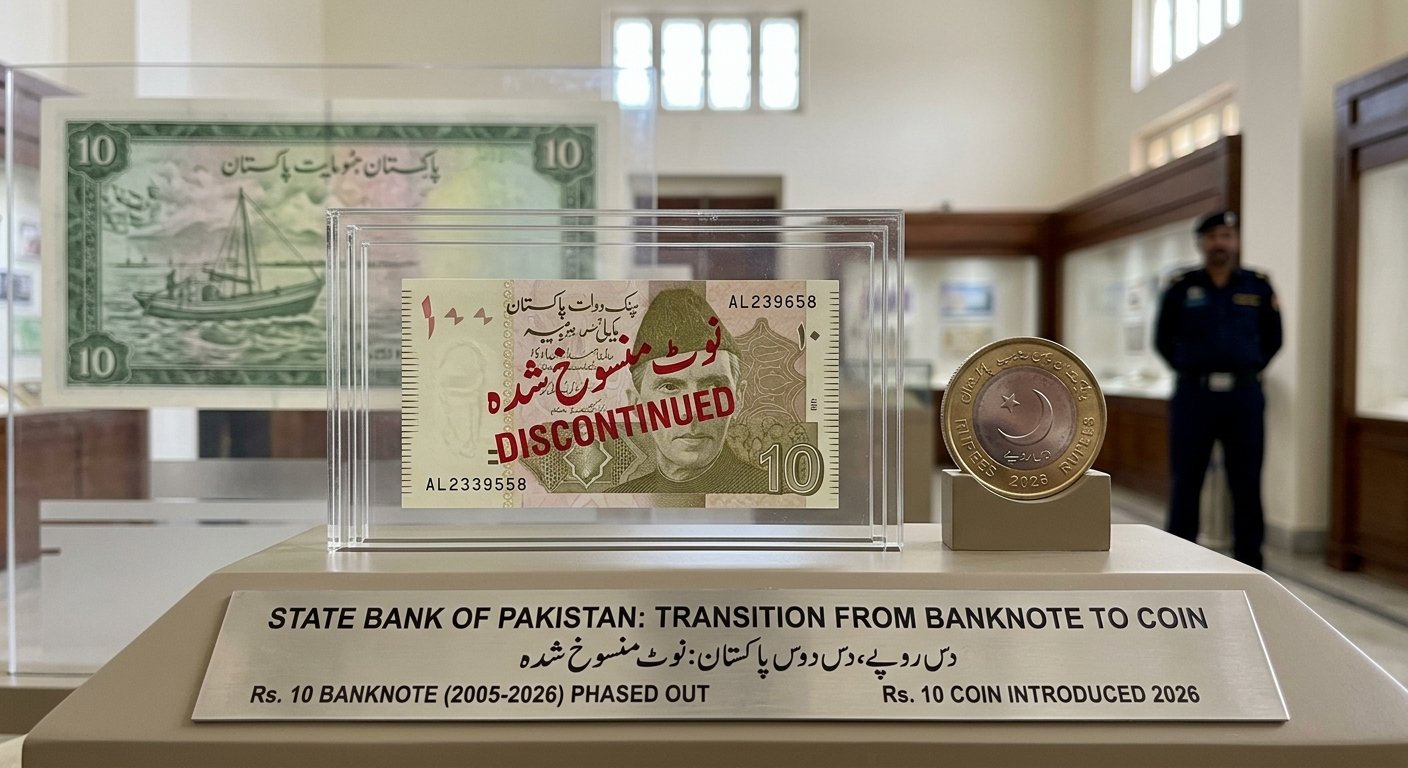
The State Bank of Pakistan is looking at stopping the printing of the Rs10 banknote and using only the Rs10 coin instead. Officials say the main reason is the high and rising cost of making the paper notes.
Deputy Governor Dr. Inayat Hussain shared this plan with a Senate committee in late August 2026. The change would happen when Pakistan launches its new series of banknotes, not right away. Current Rs10 notes will stay valid and can still be used until they wear out or are gradually taken out of circulation through banks.
The Rs10 note does not last long. It usually stays in good condition for only six to nine months because people use it so often in daily life. After that, it becomes dirty or torn and needs to be replaced. Printing and managing these notes costs the country about Rs8 to 10 billion every year. Even though Rs10 notes make up a large share of all notes printed, they form only a tiny part of the total money value in use.
A coin, by contrast, can last 20 to 30 years. Pakistan already has a Rs10 coin that was first issued in 2016. Making coins costs more at the start, but the government does not have to replace them often. Experts estimate that switching fully to coins could save Rs40 to 50 billion over the next ten years. This would also free up printing machines for higher-value notes that need stronger security features.
The move is part of a larger plan to issue redesigned banknotes with better anti-counterfeit measures. Designs for the new notes are still being finalised. For ordinary people, the change should feel gradual. Shops and banks will continue accepting both notes and coins during the transition, and public awareness efforts are expected to help everyone adjust.