
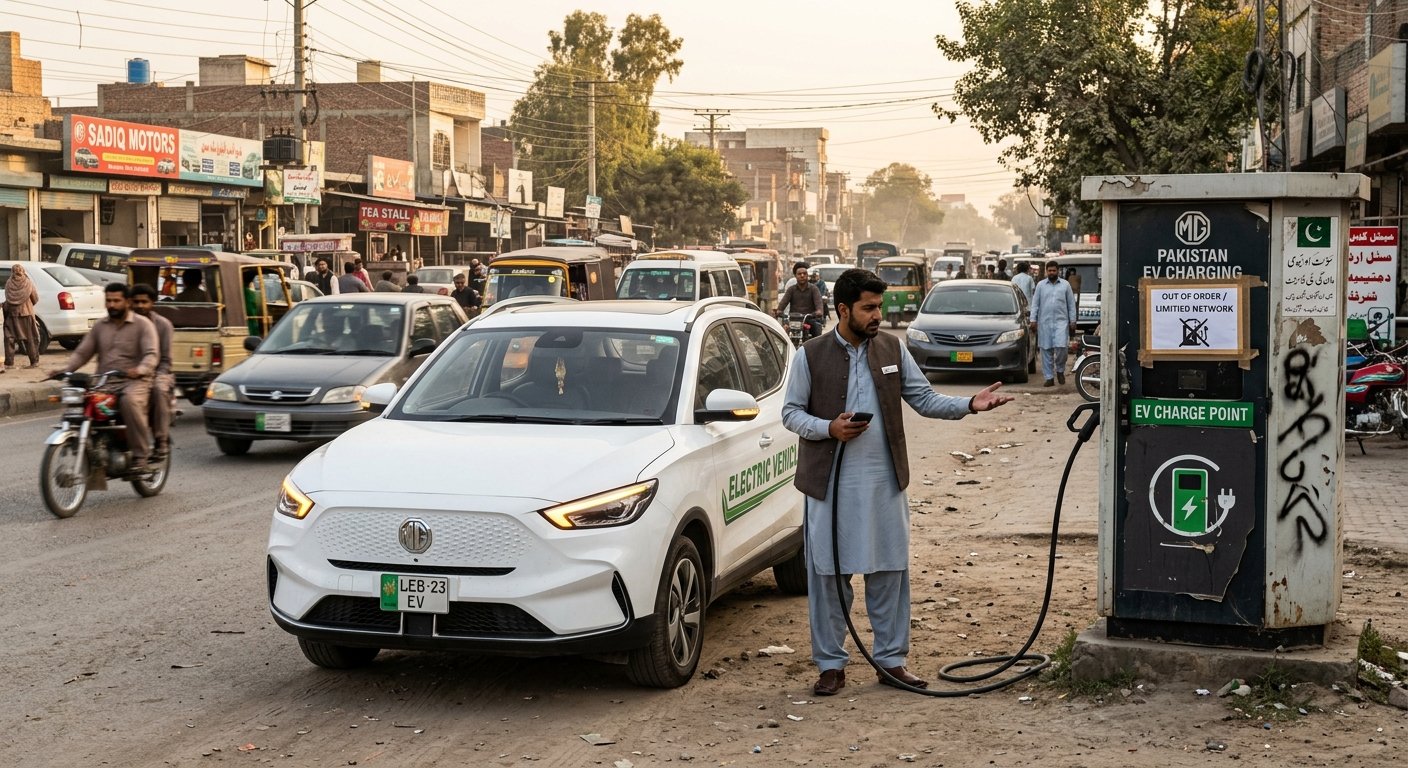
Pakistan’s shift to electric vehicles is advancing more slowly than hoped because the network of public charging points has not grown fast enough. A recent review of industry reports highlights that while more people are looking at electric and hybrid cars, the shortage of reliable places to recharge remains a major barrier.
Oil marketing companies continue to open new petrol stations across the country, yet only a small number of these sites offer electric vehicle charging. Pakistan State Oil has installed nine charging stations along the main Karachi-to-Peshawar route, covering parts of the national highway and motorway corridor. Other firms have added only a handful of recharging points while focusing mainly on fuel retail expansion.
The government aims for new energy vehicles to make up a significant share of sales by 2030, including cars, two-wheelers and commercial fleets. Progress so far has been uneven. Many existing chargers are concentrated in a few large cities, leaving long-distance travel difficult for owners. Highway coverage is still limited, which increases range anxiety for potential buyers.
Experts note that building more fast chargers requires heavy investment in power connections and equipment. Slow early sales of electric vehicles also make private operators cautious about expanding the network. Authorities are pushing oil companies to add charging facilities at more stations and are working on broader plans for batteries and related infrastructure.
Until public charging becomes more widespread and dependable, many drivers are expected to stick with conventional or hybrid vehicles. Expanding the network remains essential if Pakistan is to cut fuel imports and move toward cleaner transport.