
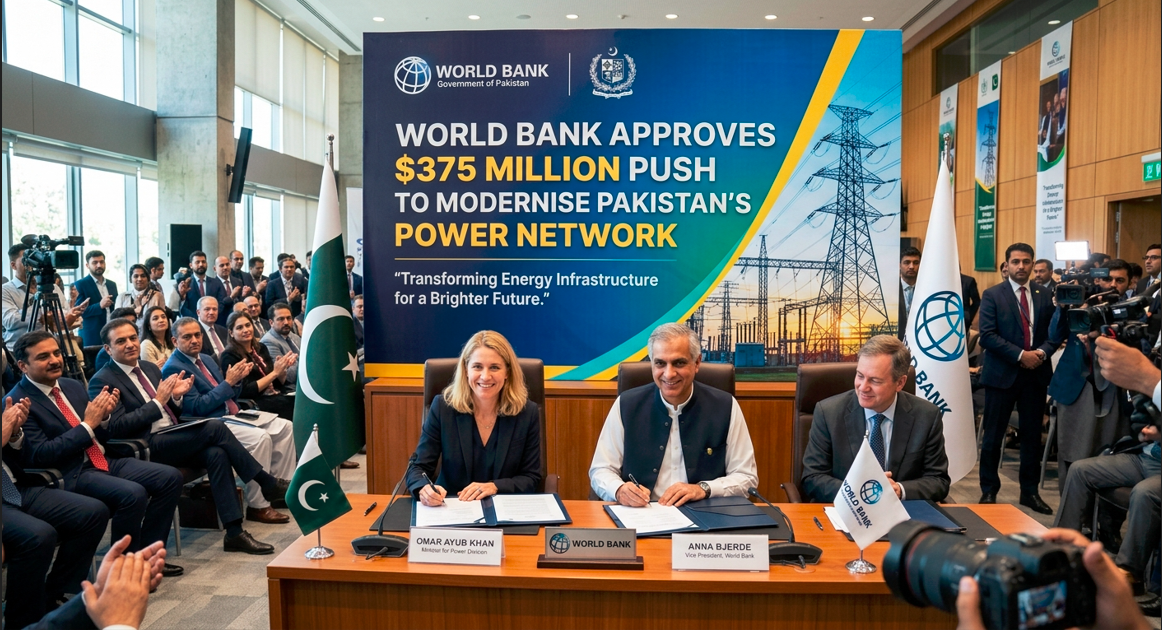
The World Bank has approved $375.9 million in financing to strengthen and modernise Pakistan’s national power transmission network. The funding supports the Grid Stability Enhancement Project, the first phase of a 10-year programme called Boosting Energy Security through Transmission in Pakistan (BEST-PAK).
The project aims to reduce power outages, improve grid reliability and bring more clean energy to homes, businesses and industries. It will install advanced equipment, including Static Synchronous Compensators (STATCOMs) at three major 500 kV substations and reactors plus capacitor banks at 26 other substations. These upgrades will stabilise the grid and improve electricity flow.
A key benefit is unlocking 640 megawatts of wind power that is currently restricted. This will allow the full use of 1,840 MW of wind capacity in southern Pakistan by moving electricity to areas of high demand. The project will also support about 491 MW of planned private-sector renewable energy projects.
These steps help Pakistan move toward its goal of generating 60 percent of its electricity from renewable sources by 2030, in line with its Paris Agreement commitments. Over its lifetime, the project is expected to avoid around 832,500 tonnes of carbon dioxide emissions each year, more than 20.8 million tonnes over 25 years.
World Bank officials note that a modern, reliable transmission system is essential for Pakistan’s energy future, lower costs and economic stability. The investment forms an important part of efforts to build a cleaner and more resilient power sector.