
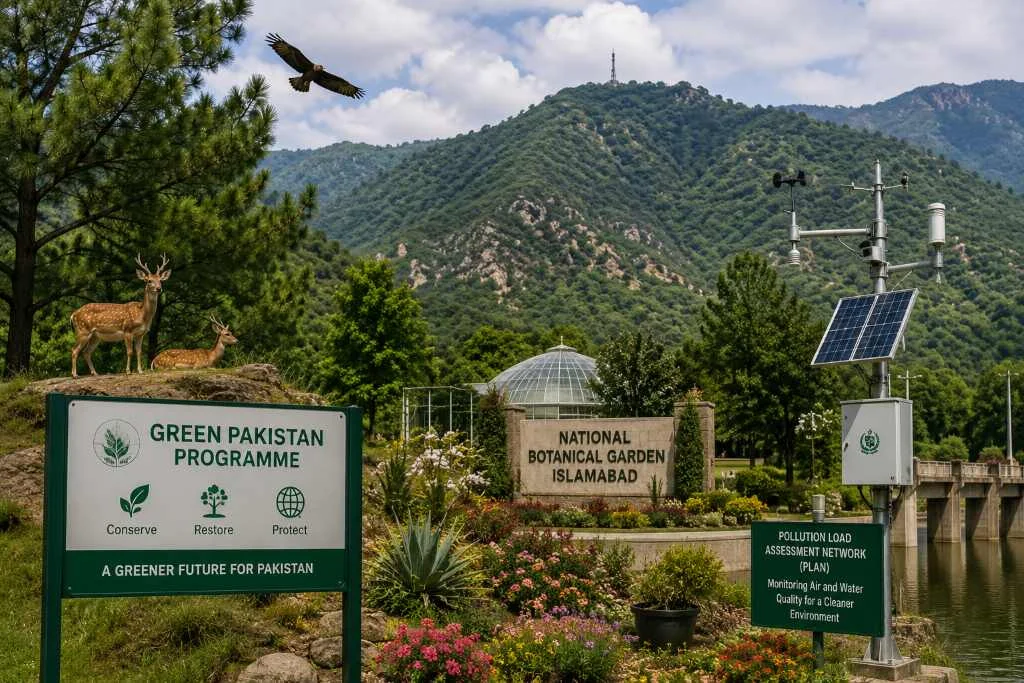
The Pakistani government is taking fresh steps to protect nature and fight climate change. In the upcoming financial year 2026-27, it will add three important new projects under the Upscaling of Green Pakistan Programme (UGPP).
This revised programme has a big total cost of Rs122.146 billion. The federal government will provide Rs76.322 billion, while provinces will contribute Rs45.8 billion. The UGPP, which runs from 2019 to 2028, is the country’s main effort for planting trees, saving wildlife, and storing carbon. It has already received Rs2.335 billion for the new year.
The first new project focuses on the beautiful Margalla Hills National Park near Islamabad. It will cost about Rs1.689 billion and aims to protect plants and animals, manage the landscape better, and follow world standards. Plans include building a Wildlife Rescue Centre and an Urban Forestry Unit to help save animals and grow more green spaces in the city.
The second project is the creation of a National Botanical Garden at Bani Gala in Islamabad. With Rs800 million for the first phase, it will protect Pakistan’s plant life, build seed banks, nurseries, and research areas. This garden will become a top place for conservation, education, and eco-tourism, helping the country meet its global promises on nature.
The third initiative is the Pollution Load Assessment Network (PLAN). It will cost Rs1 billion and set up systems to check air and water pollution in Islamabad. This will help leaders make better decisions and enforce rules to keep the environment clean.
These projects show Pakistan’s strong commitment to a greener future. By restoring forests, saving biodiversity, and monitoring pollution, the government hopes to build stronger natural defenses against climate problems and improve life for future generations.