
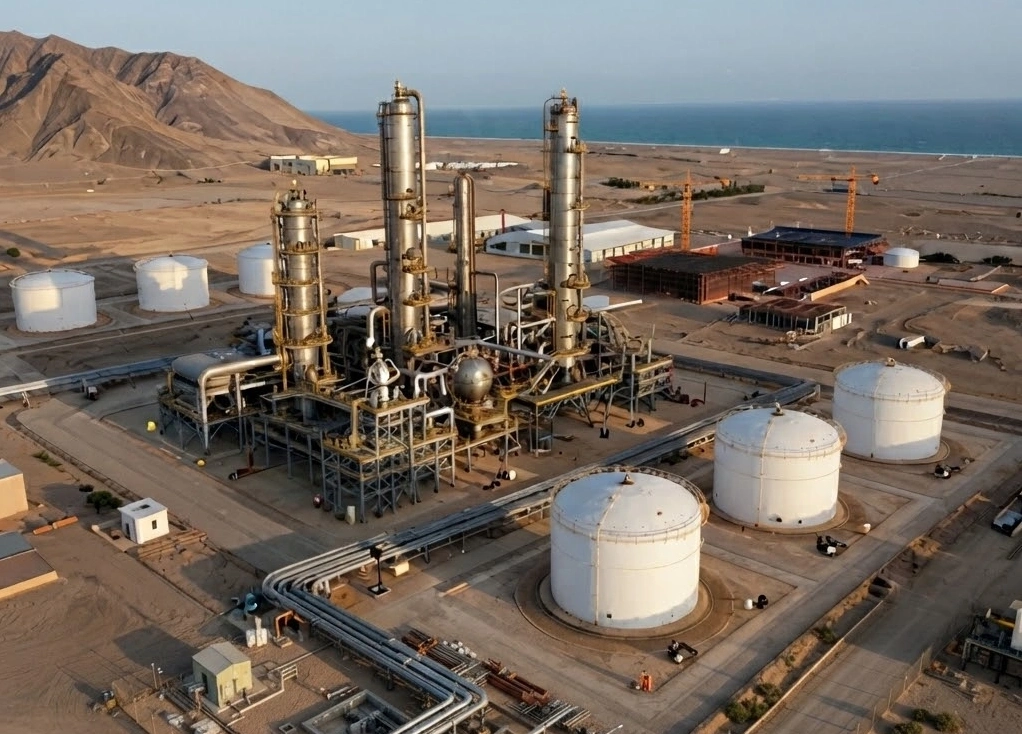
The Pakistani government has begun work on a major plan to build an integrated oil city at Hub in Balochistan. The project aims to create a modern petroleum logistics and trading centre. It will feature an offshore Single Point Mooring (SPM) facility, dedicated oil pipelines, and large bonded storage tanks.
The idea is to handle bigger crude oil tankers and ships carrying finished petroleum products more easily. At present, ports in Karachi and Port Qasim face limits because of shallow waters. These restrictions make it harder for very large vessels to dock. The new SPM will sit in deeper water offshore. Large ships can unload their cargo there without entering the busy ports.
Two dedicated pipelines will link the SPM to the mainland. One will carry imported crude oil toward facilities at Kemari under the Karachi Port Trust. The other will move finished petroleum products toward Port Qasim and connect with the existing White Oil Pipeline network. This setup should improve the flow of oil across the country.
The oil city will sit on government land at Hub that was earlier set aside for a coastal refinery by Parco. Officials have hired a consultancy firm called Technique to carry out a basic feasibility study. The study should finish in about two months. After that, the government will decide on the next steps.
The project also ties into the government’s updated policy on customs-bonded storage. Companies and traders will be able to keep imported oil products in special facilities without paying duties right away. This can help attract international interest and turn Hub into a useful trading point.
Overall, the plan seeks to ease pressure on existing ports, cut logistics costs, and strengthen Pakistan’s energy supply chain. If it moves forward successfully, Hub could become an important centre for petroleum handling and storage in the region.