
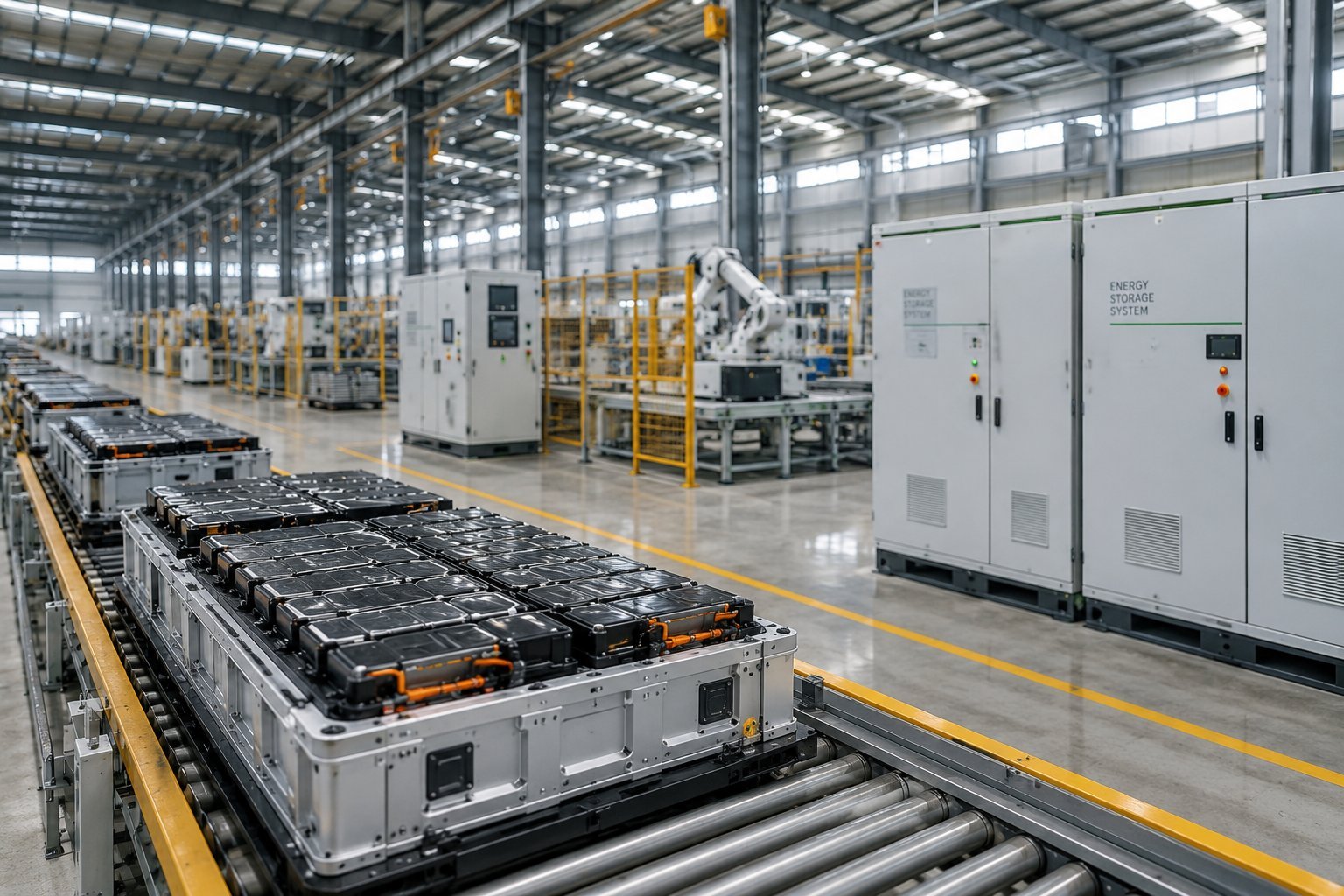
Pakistan has started a new programme called the E-Cluster model to build its own clean-energy factories. The plan focuses on making batteries, electric vehicles, and energy storage systems inside the country instead of importing them.
The idea began in 2022 and moved into the real implementation stage in 2026. Chinese companies will share modern technology, research support, factory machines, and supply-chain knowledge. Local Pakistani partners will provide land, government approvals, and help with sales. This partnership is known as the “3+3” model.
At first, factories will use a Completely Knocked Down (CKD) method. This means parts will come from China and be assembled in Pakistan. Over time, more and more parts will be made locally until a full supply chain exists in the country.
Four to five partners have already joined the programme. Large-scale production is expected to start within five to six months. The goal is to create “Made in Pakistan” products that can compete in regional and global markets.
This step is important because Pakistan has seen very fast growth in solar power. Solar capacity jumped from less than 2 gigawatts three years ago to about 38 gigawatts by the end of FY2025. Battery imports have also risen sharply. Local manufacturing will create jobs, reduce import costs, and help the country become more self-reliant in clean energy.
Officials say the E-Cluster will turn major industrial areas into modern clean-energy hubs and support Pakistan’s longer-term plan to increase clean electricity.